Trading, a practical day trading framework with levels, confirmation and risk control
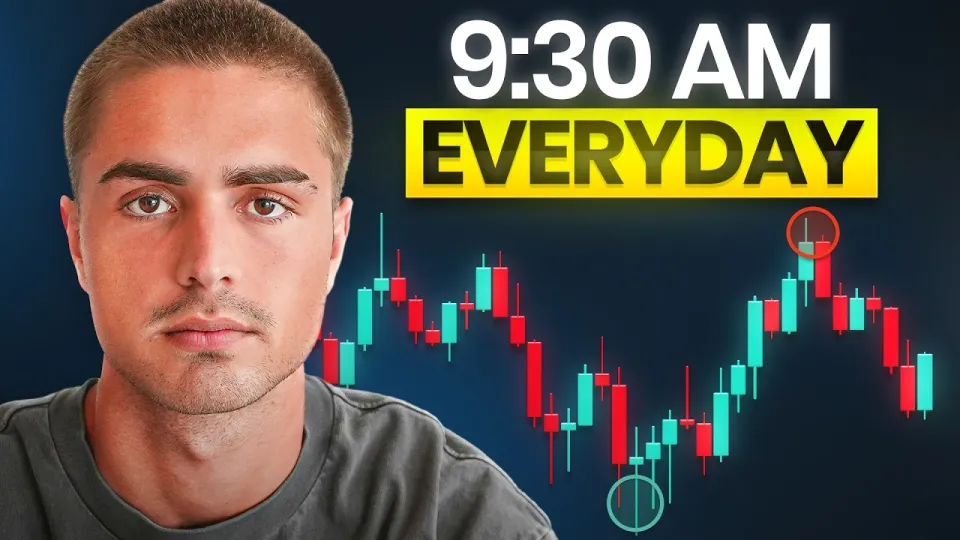
Video: My UPDATED Day Trading Strategy (2026)
Want articles like this for your own video to promote it on YouTube and Google? Order them through the Telegram bot @sat_sit_bot. The bot writes and publishes the articles itself (with your YouTube video embedded) on popular topical websites (no ads). Your first 50 articles are free.
· based on the channel TJR
Day trading is the practice of opening and closing positions within a single session, usually on liquid instruments such as index futures or major forex pairs, where the goal is to capture a small, repeatable edge rather than a long-term trend. A workable approach rests on three pillars: pre-marked price levels, a confirmation rule that decides when a setup is valid, and position sizing that keeps any single loss small. TJR's updated walkthrough of his own process is a useful reference point, and the paid Blueprint program is the resource the channel points to for traders who want the full system rather than a summary.
What day trading actually requires before the first trade
Day trading is a job with a fixed routine, not a series of impulsive clicks; the preparation happens before the market opens. A session that starts with a blank chart almost always ends with a reactive, emotional trade, so the work is front-loaded:
- Pick one or two instruments and stay with them for months. Jumping between futures, forex and crypto pairs destroys the pattern recognition that a strategy depends on.
- Mark the levels that matter — prior day high and low, the overnight range, session open, and any obvious swing highs or lows from the higher timeframe.
- Write down the conditions for a valid entry, the stop placement and the profit target before the session begins, so decisions are made in advance rather than in the heat of a move.
- Check the economic calendar. Scheduled data releases and central bank events produce the volatility spikes that invalidate otherwise clean setups.
- Define the maximum number of trades and the maximum daily loss. Both limits exist to stop a bad morning from becoming a bad month.
The three-step trade cycle: level, confirmation, entry
Every trade in a level-based day trading strategy follows the same sequence: price reaches a marked level, the level produces a reaction, and only then does the trader act. The confirmation step is the part most beginners skip, and it is the difference between trading a plan and guessing.
- Level. The area is identified in advance: a prior session extreme, a range boundary, or a high-volume zone from the higher timeframe.
- Confirmation. Price must show it is rejecting the level — a strong candle close back in the intended direction, or a clear failure to break through. Waiting for the close costs a few ticks of entry price but filters out most false breaks.
- Entry and stop. The stop goes beyond the level that invalidated the idea, not at an arbitrary distance. If the stop is too wide for the position size the account allows, the trade is skipped.
This is also the question viewers ask most often: whether confirmation means a candle close or simply a reaction at the level. The honest answer is that both exist as variants, but a candle close is the more objective rule because it can be checked afterwards in a journal, while "it looked like a rejection" cannot.
Risk management rules that keep a day trader in the game
Risk control is the part of day trading that determines survival, and it is arithmetic rather than opinion. A trader risking 1% per trade needs roughly 70 consecutive losses to lose half the account, while a trader risking 10% needs only seven. That asymmetry is why professional desks and funded-account firms impose hard limits.
Practical rules that hold up across futures and forex:
- Risk a fixed 0.5–1% of the account per trade, calculated from the stop distance and the instrument's tick value, not from a round number of contracts.
- Cap the daily loss at two to three times the per-trade risk. Once hit, the session is over regardless of how good the next setup looks.
- Reduce size during the first weeks of any new strategy. A new rule set needs a sample of at least 50–100 trades before its expectancy means anything.
- Account for costs: commissions, spreads and slippage turn a marginal strategy into a losing one, especially on instruments with a wide tick spread.
Why discipline and a journal outperform indicator hunting
The most common failure in day trading is not a bad strategy but inconsistent execution, and a journal is the only tool that exposes it. Viewers of TJR's videos repeatedly point to rule-following as the deciding factor, and that matches the standard experience: two traders can run the same setup and get opposite results purely through sizing and patience.
A useful journal records, for every trade: the instrument, the level traded, whether confirmation was present, the planned risk, the actual result, and a one-line note on emotional state. After 30–50 entries, patterns appear — a specific session time that consistently loses money, a setup variant that never works, or a tendency to widen stops after a loss. Those findings are worth more than any new indicator, and dedicated tools such as Tradezella (https://tradezella.com/?fpr=tjr) exist specifically to automate the record-keeping.
Common questions and doubts from traders
Most doubts around day trading cluster into a few recurring themes, and each has a practical answer. Beginners want to know how long the learning curve is, whether funded accounts are legitimate, and how to tell a real edge from a lucky streak.
- "How long until profitable?" Expect months, not weeks. A realistic path is several hundred simulated or small-size trades before the results become statistically meaningful.
- "Are prop firm accounts worth it?" Funded accounts let a trader scale capital without risking their own savings, but they come with drawdown rules that punish oversized positions. Firms referenced by the channel include Alpha Futures (https://app.alpha-futures.com/signup/TJR/), Lucid Trading (https://lucidtrading.com/ref/TJR/) and Tradeify (https://tradeify.co/?ref=PBCGEZAG).
- "Is this strategy too simple to work?" Simple rule sets are usually more robust than complex ones, because there are fewer parameters to overfit to past data.
- "Do I need paid indicators?" No. Indicators can help structure a chart, but the edge comes from the level, the confirmation and the risk sizing. The channel's own indicator set is available at https://go.tjrtrades.com/indicators-44nwn83.
Useful links
- Full trader Blueprint: https://go.tjrtrades.com/blueprint-km5bykx
- Indicator set used on the channel: https://go.tjrtrades.com/indicators-44nwn83
- Funded account raffle entry: https://form.tjrtrades.com/funded-contest
- Alpha Futures (10% off): https://app.alpha-futures.com/signup/TJR/
- Lucid Trading (40% off): https://lucidtrading.com/ref/TJR/
- Tradeify (30% off): https://tradeify.co/?ref=PBCGEZAG
Final thoughts on building a repeatable trading process
A day trading strategy is only as good as the rules that surround it: marked levels, a written confirmation condition, fixed risk per trade and a journal that turns experience into data. TJR's updated breakdown on the TJR channel is a solid starting framework, but the work of adapting it to a specific instrument and schedule falls to the trader. Start with one market, one setup and 0.5% risk, and let a few dozen logged trades tell you whether the edge is real. For traders who want the complete system in one place, the Blueprint program is the channel's own recommendation — and remember that the video description itself warns that most day traders lose money.
Key takeaways
- Day trading means opening and closing positions within one session, usually on futures or forex, where liquidity and tight spreads matter most.
- The core workflow is three steps: mark levels before the open, wait for a reaction or candle close as confirmation, then enter with a predefined stop.
- Risk per trade should be a fixed small percentage of the account — typically 0.5–1% — so a losing streak cannot wipe out the balance.
- Most retail day traders lose money; the TJR video description states this directly, and funded-account rules exist precisely because of that statistic.
- A trading journal and a written rule set matter more than any indicator: discipline and rule-following are the most repeated themes in viewer feedback.
Questions & answers
What does "confirmation" mean in a day trading entry?
Confirmation is the evidence that a marked level is being respected before you commit capital. The most objective version is a candle close back in your intended direction after price touches the level; a looser version is a visible rejection wick or a stall in momentum. A close is easier to log and review, which is why it is the more reliable rule for beginners.
How much should a day trader risk per trade?
A common professional standard is 0.5–1% of the account per trade, with a daily loss cap of roughly two to three times that amount. The exact number matters less than consistency: the position size should be derived from the stop distance and the instrument's tick value, not chosen as a round number of contracts.
Do you need a funded prop account to day trade?
No, but funded accounts let a trader access larger capital without risking personal savings, in exchange for strict drawdown rules. They suit traders who already have a tested strategy and a journal of consistent results; for someone still learning, a small personal account or a simulator is cheaper tuition.
How long does it take to become consistently profitable?
Realistically months of screen time, not weeks. A reasonable benchmark is 50–100 logged trades for a first read on a strategy and several hundred before the results carry statistical weight. Progress shows up first as fewer rule violations, then as a stable equity curve.
Source: My UPDATED Day Trading Strategy (2026) · Markdown version